On-premises AI
for businesses
The IOWIS Platform runs in your company’s infrastructure, on hardware selected to suit your requirements. Language models and core AI processing run there too. Company content is not sent to external AI services for processing. The core functionality works without a continuous internet connection; online access is set up only for features that need external information or connected services.
IOWIS supplies the platform and hardware and supports the technical implementation.
What on-premises AI means in practice
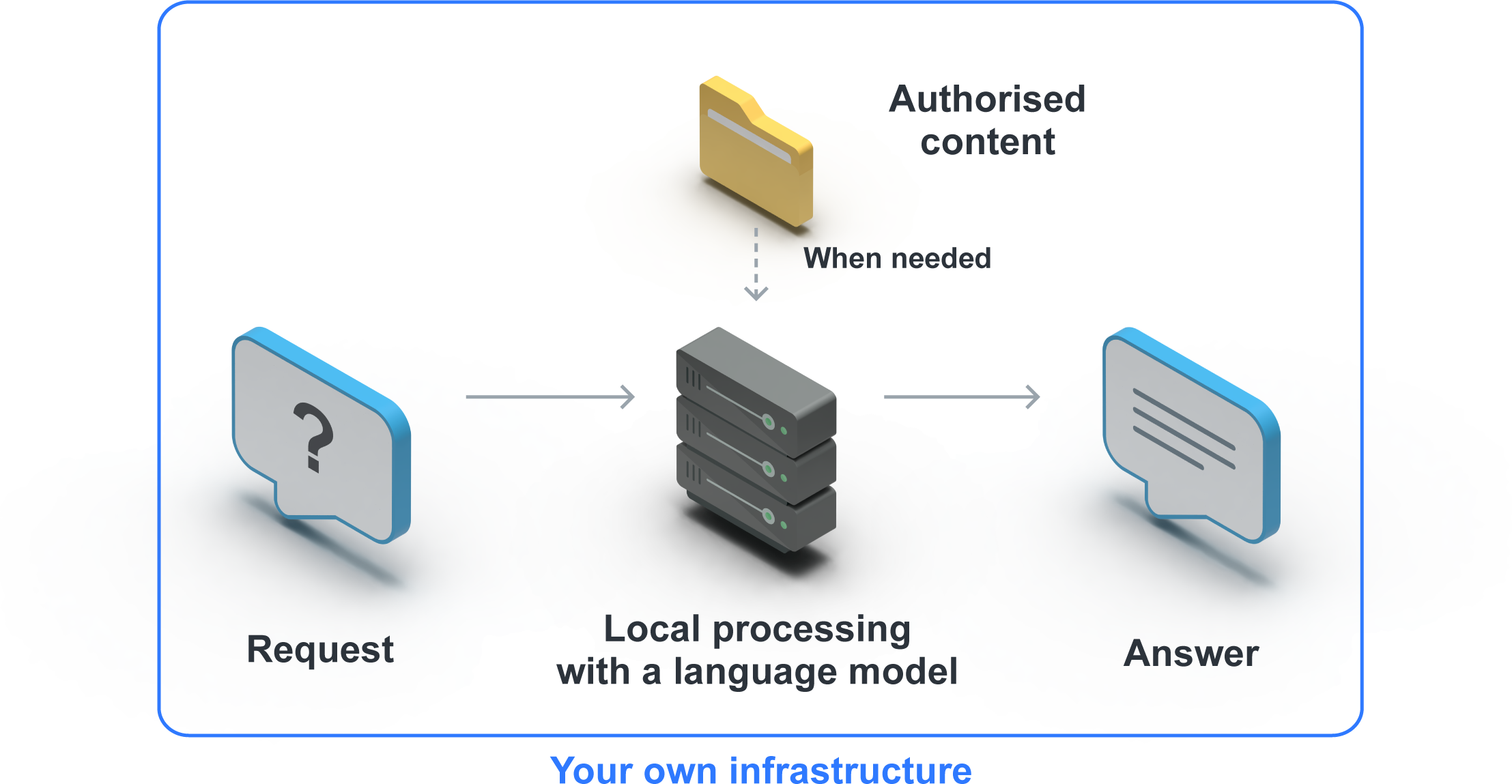
With an on-premises solution, AI runs in the infrastructure of the company using it, rather than in that of an external service. This is where the IOWIS Platform and its language models, known as large language models (LLMs), run.
Both document storage and the computation that produces an answer take place locally. When an employee submits a request, the platform passes it to the language model running on the hardware at your company. The request is processed and the answer generated there. The technical term for this is inference.
The language model processes the input, the instructions for the selected assistant and any additional information needed for the answer. If the task requires internal company knowledge, the platform can supply relevant content from documents or knowledge bases it is authorised to use.
The assistant and the permissions assigned determine which content can be used. The model does not automatically have access to every document or data source.
Would you like to integrate locally run language models with your existing software and workflows? We help you select, set up and integrate suitable models. Find out more about our consulting and implementation services for on-premises AI.
External connections only where features need them
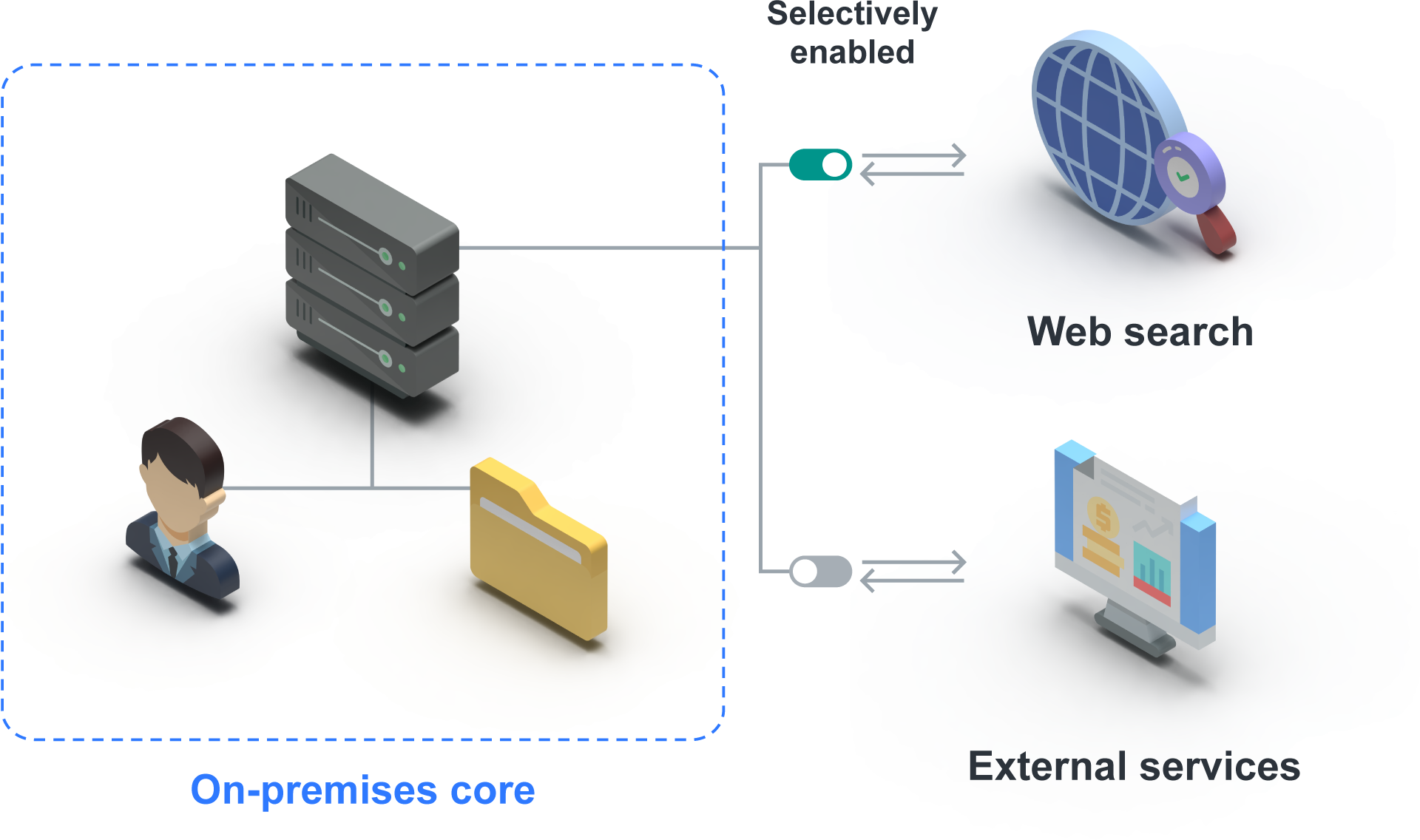
The core features of the IOWIS Platform do not require a continuous internet connection. Employees can work with locally available language models, uploaded files and internal knowledge resources without calling an online service for every request.
Software, feature and model updates can also be supplied and installed offline.
An external connection is needed when a feature has to access information or services outside your environment. Examples include:
- web search and crawling,
- external knowledge sources,
- communication platforms,
- other online and cloud services.
For a web search, the platform retrieves current content from the internet. For an integration, data is exchanged with the connected service through the designated interface. The information transferred depends on the feature and its configuration.
Your company decides which connections to allow for the intended use. An on-premises installation does not have to be completely disconnected from the internet.
When running AI locally makes sense
External AI services process requests, uploaded files and any accompanying content within the provider’s infrastructure. That may be acceptable for general tasks. It becomes more difficult when employees need to use AI with confidential documents, personal data, trade secrets or internal expertise.
Alongside data protection and regulatory requirements, companies need to consider the substantial commercial value their internal information can hold. If it is exposed through security vulnerabilities, misconfigurations or unauthorised access, the consequences can include financial losses, competitive disadvantages and a loss of trust.
When using external services, companies therefore need to assess where data is transferred, which providers are involved, how content is stored and logged, and how much control they actually have over processing.
When AI runs locally, you retain control of your data during AI processing. Core processing takes place within your own infrastructure. Data sources, access permissions and external connections can be configured for the intended use.
Running AI locally also allows companies to plan AI processing costs independently of a cloud provider’s token prices. Together with the ability to choose their own language models, this gives them greater control over how they use AI.
On-premises AI is not automatically GDPR-compliant
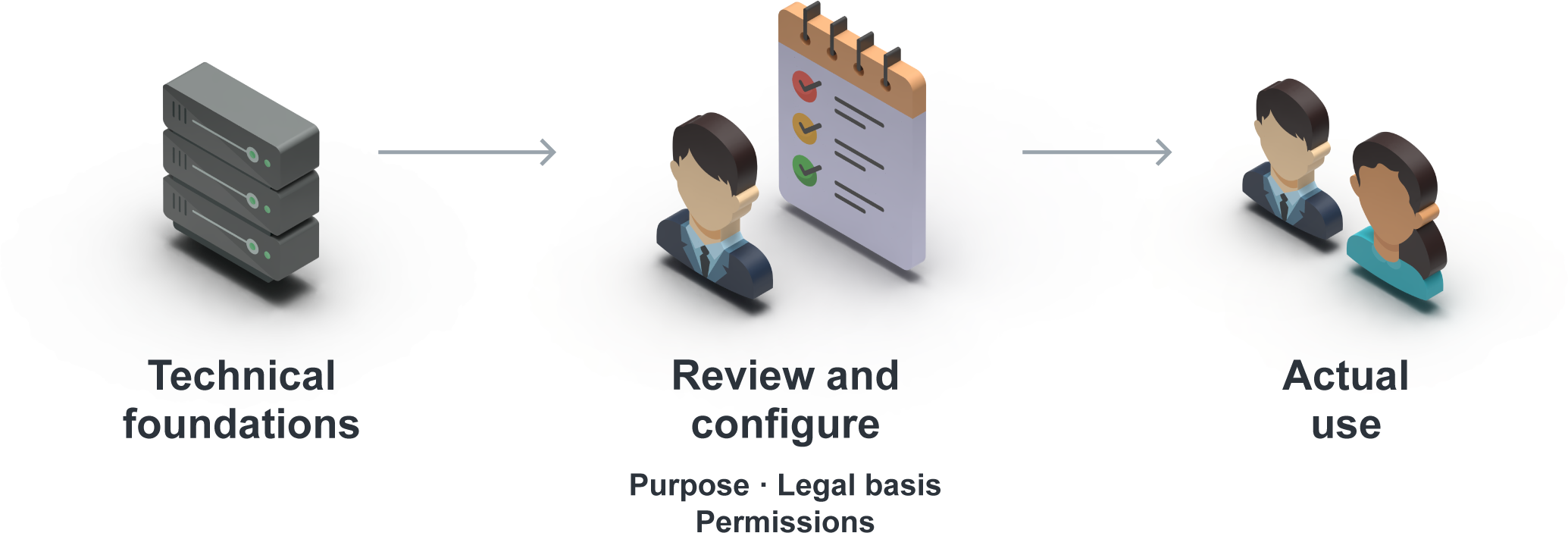
An on-premises installation is not GDPR-compliant simply because of where it runs.
The IOWIS Platform does, however, provide important technical foundations for GDPR-compliant operation. These include configurable access permissions, separate knowledge resources, retention and deletion policies, logging of relevant activity and control over external integrations.
Whether a particular use complies with data protection requirements also depends on the processing involved. Among other things, you must determine which personal data is processed, for what purpose, on what legal basis and who is allowed to access it.
The resulting legal and organisational requirements must be reflected in how the platform is configured and used. Any external features deliberately connected to the platform must also be included in this assessment.
How the IOWIS Platform is deployed and run
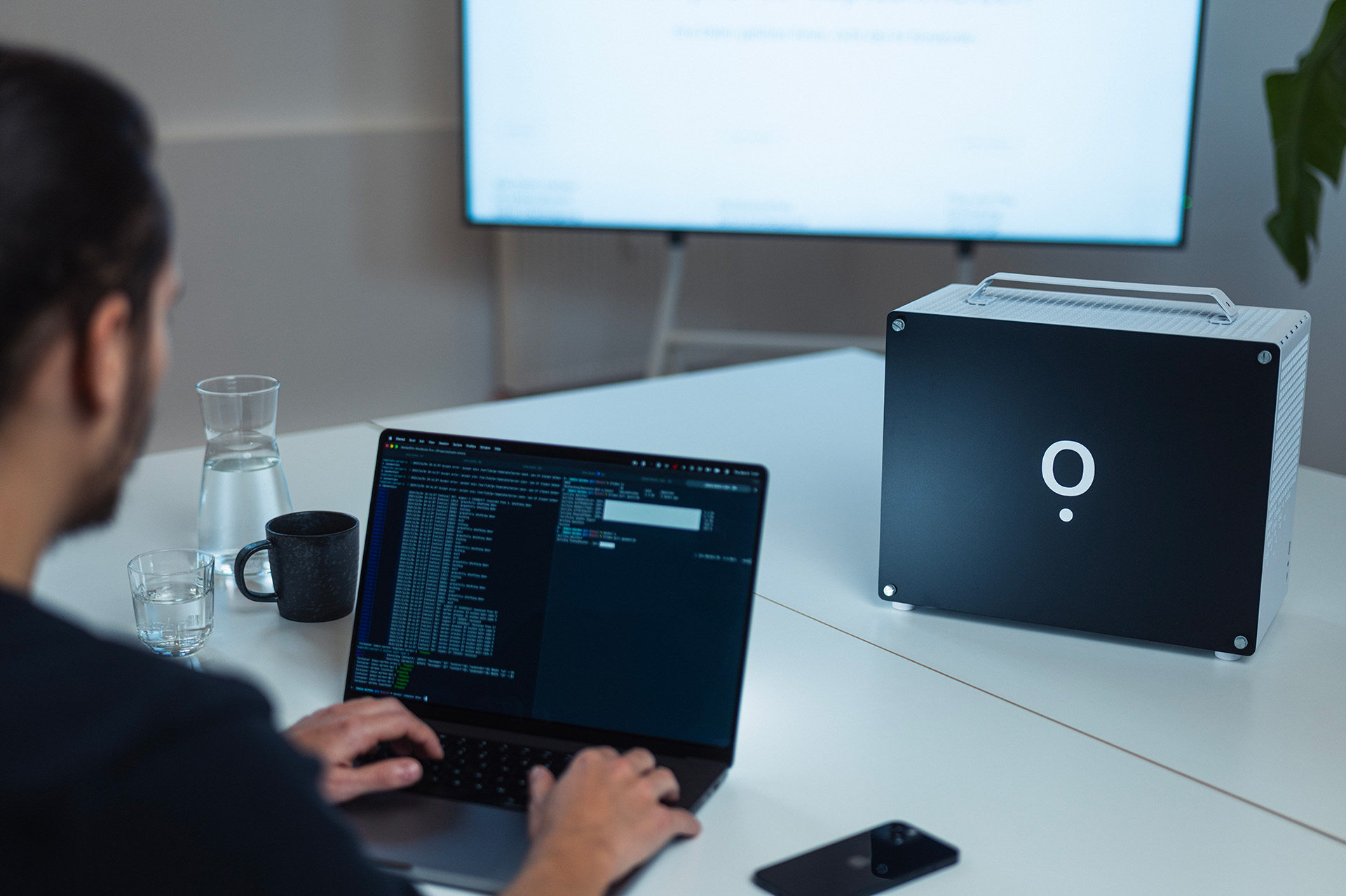
For an on-premises deployment, hardware, integration with existing IT systems and day-to-day operation are planned together. The configuration depends on the intended use, required features and existing infrastructure.
Hardware to suit the workload
Computing requirements depend on the language models being used and the response speed you need. Concurrent requests and features for documents, images, audio or video also affect the capacity required.
IOWIS uses these requirements to select suitable hardware and supplies it together with the platform.
Integration with existing infrastructure
The solution is integrated into your existing systems and network. This takes account of internal access arrangements, user structures, required interfaces and external connections.
The data sources and systems connected depend on the intended use cases.
Operation and updates
Because the platform runs within your company’s infrastructure, it becomes part of your existing IT operations. This includes monitoring availability, regular backups and planned maintenance windows. The arrangements depend on your existing IT environment.
IOWIS supplies software, feature and model updates. These can also be installed without direct internet access. The IOWIS team provides support with technical questions and adjustments.
Would you like to offer on-premises AI to your customers?
You can combine the IOWIS Platform with your hardware and services.
Put AI to work in your own infrastructure
We discuss how you could run the IOWIS Platform in your own infrastructure and what you would need to put in place. We look at your intended use cases, required features, internal data sources, necessary connections and suitable hardware.
Frequently asked questions about on-premises AI
What work does our team need to do to implement and run the platform?
Technical integration usually requires a contact who is familiar with your network and systems. Integration with the internal network and existing firewall, VPN and access arrangements is coordinated with your IT team. IOWIS supplies the hardware and platform and supports the technical implementation.
If no suitable internal contact is available, IOWIS can take on additional technical tasks after reviewing the existing environment. This work is agreed separately.
For ongoing use, you appoint at least one administrator to manage users, permissions, assistants and knowledge resources, for example. IOWIS and, if requested, JADE IT can also help select initial use cases, work with test groups and introduce employees to the platform.
After the platform goes live, IOWIS provides updates and support. Network access, backups and availability monitoring are handled through your existing IT responsibilities.
Can local AI models match the performance of leading cloud models?
No. For particularly demanding tasks, the most capable proprietary cloud models still achieve a level of quality that locally deployable models cannot fully match on cost-effective business hardware.
Many specific business tasks do not need that maximum capability, however. What matters is whether a model can perform the intended tasks reliably, quickly and to the required standard. A larger model or one with better benchmark scores is not automatically the better choice if its additional capabilities provide no clear benefit in actual use.
Open-weight models are developing rapidly and closing the gap in various areas. Benchmarks provide a useful guide, but only partly reflect practical use with your own documents, instructions and workflows.
IOWIS therefore selects models to suit the intended tasks, requirements for quality and speed, and available hardware.
Current model comparisons:
Can the IOWIS Platform run on existing hardware?
Would you like to use existing hardware? Get in touch.
Can the platform run entirely without an internet connection?
Yes. In a fully on-premises deployment, the IOWIS Platform’s core features and locally deployed language models can run without an internet connection. A fully isolated, air-gapped environment disconnected from the internet is also possible.
The platform does not need to connect regularly to IOWIS for licence checks, account management or telemetry. In a fully isolated environment, however, only features that do not need an external connection can be used. Web search, external data sources and connected online services each require a connection to be set up explicitly.
How are updates installed without direct internet access?
IOWIS provides encrypted update packages tailored to each installation. You can download these from the IOWIS update server, transfer them to your isolated environment on a USB drive and install them there. A changelog describes the included changes before the download.
For environments where downloading update packages is not desired, regular delivery of a prepared USB drive can be arranged instead. This additional service is charged separately.
What happens if the hardware fails?
For hardware supplied by IOWIS, IOWIS remains the first point of contact. Together with you, IOWIS determines whether the problem lies with the platform or the hardware. If the hardware is faulty, IOWIS coordinates repairs, replacement of affected components or any necessary on-site service with the relevant hardware partner.
This applies whether the hardware is purchased, rented or leased. For hardware you already have, your existing warranty and support agreements apply.
Does IOWIS have permanent access to the system or receive data from our environment?
No. IOWIS does not have remote administrative access to the platform by default. The platform also does not send telemetry, usage statistics, error reports or company content to IOWIS.
If IOWIS needs access to the system for a support request, you decide whether and how to provide it. One option is to enable remote access temporarily. An on-site visit can be arranged separately on request.